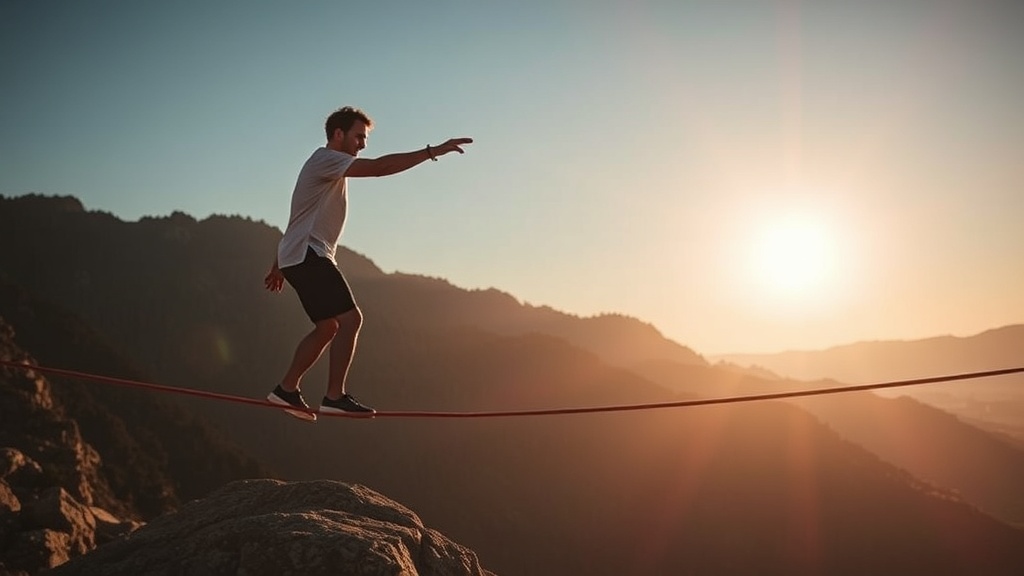
The One Slacklining Trick That Instantly Improves Balance (And Why Most People Ignore It)

Quick Tip
Fix your gaze on a single point ahead to instantly improve slackline balance and control.
Most beginners think slacklining is about strength. It isn’t. Strength helps, but it’s not the lever that unlocks fast progress. The real switch—the thing that changes everything almost instantly—is where you look.
This sounds too simple to matter. It isn’t. Fixing your gaze is the fastest way to stabilize your body, calm your nervous system, and stay on the line longer. Ignore it, and you’ll keep fighting the line instead of learning it.

The Tip: Lock Your Eyes on a Fixed Point
Pick a single, unmoving object at eye level—tree bark, a bolt on your anchor, a rock in the distance. Then commit to it. Your eyes don’t wander. Your head doesn’t drift. You stay locked in.
That’s it. That’s the trick.
But here’s why it works so well: your body follows your eyes. The moment your gaze stabilizes, your micro-adjustments become smaller, smoother, and more controlled. Instead of reacting late, your body starts anticipating the line’s movement.
Why Most People Get This Wrong
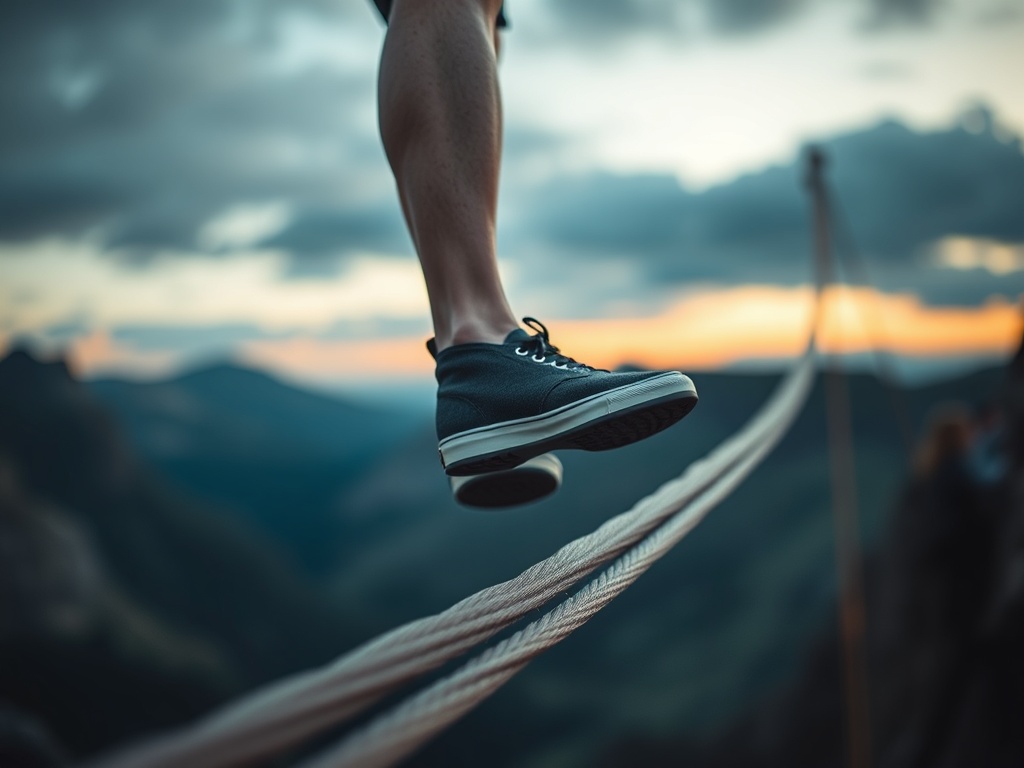
Watch beginners and you’ll see the same pattern: their eyes bounce everywhere. They look down at their feet, glance at the line, check their surroundings, then panic when the wobble starts.
Every eye movement sends new information to the brain. That overload creates hesitation. Hesitation creates instability.
Looking down is especially destructive. It shortens your posture, collapses your chest, and pulls your center of gravity forward. The line reacts immediately.
Experienced slackliners rarely stare at their feet. They trust their feet. Their focus is forward, steady, almost boring to watch—but incredibly effective.
What Actually Changes When You Fix Your Gaze
This isn’t just a mindset trick—it’s biomechanics and neurology working together.
- Posture improves instantly: Your spine aligns, shoulders settle, and your body stacks naturally.
- Balance corrections get smaller: Instead of big swings, you make subtle adjustments.
- Reaction time improves: You anticipate motion instead of chasing it.
- Mental noise drops: One focal point replaces a flood of visual input.
The result? You stay on the line longer with less effort.
How to Apply It (Without Overthinking)
Don’t turn this into a complicated drill. Keep it simple:
- Step onto the line and pause.
- Pick a point straight ahead—roughly eye level.
- Soften your gaze (don’t strain your eyes).
- Keep your head still and let your body adjust underneath.
If you fall, reset and choose the same point again. Consistency matters more than perfection.
After a few sessions, you’ll notice something shift: the line feels slower. That’s not the line changing—it’s your perception stabilizing.
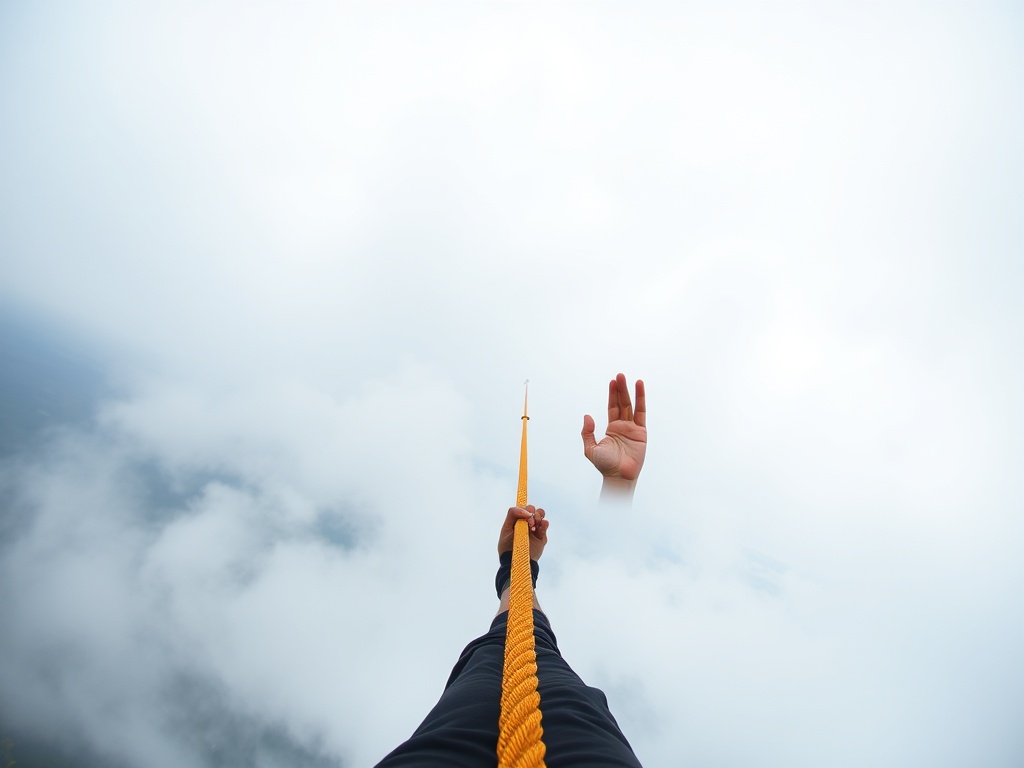
Common Mistakes (Even After You Know This)
Knowing the trick doesn’t mean you’ll apply it correctly. Watch for these:
- Switching focal points mid-walk: Pick one and stick to it.
- Staring too hard: Tension in your eyes spreads through your body.
- Dropping your chin: Keep your head neutral, not tucked.
- Panicking and looking down: This is the habit you’re breaking.
Every time you catch yourself looking down, reset immediately. That awareness is part of the training.
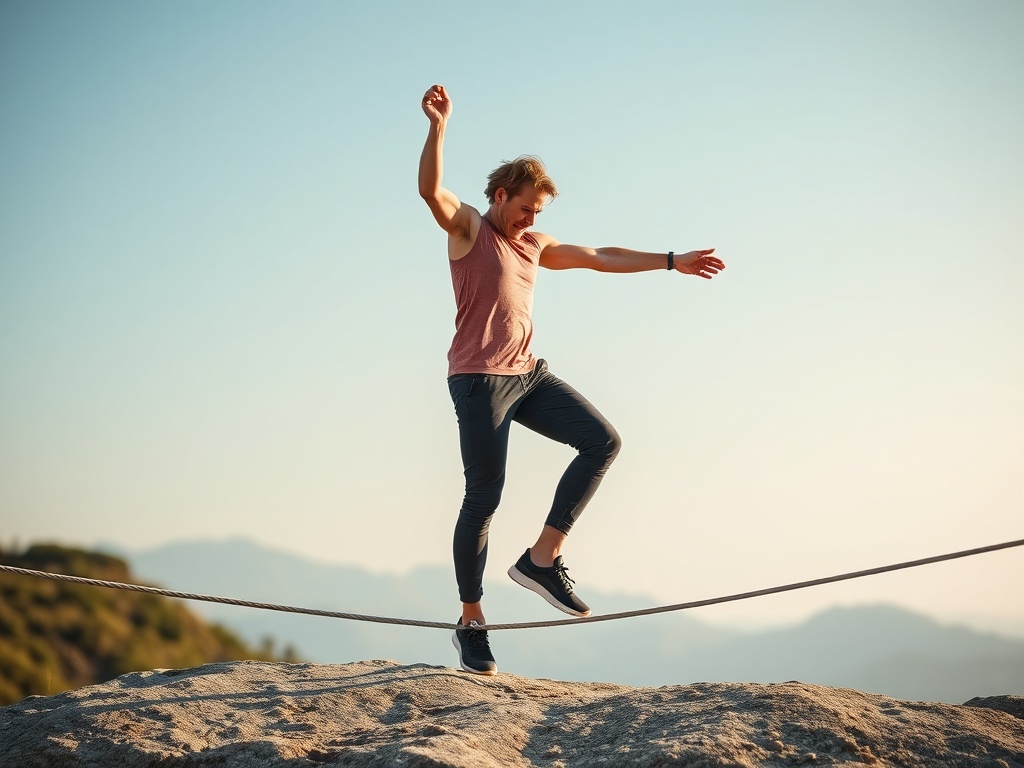
Why This Scales With Skill
This isn’t just for beginners. The same principle applies at every level.
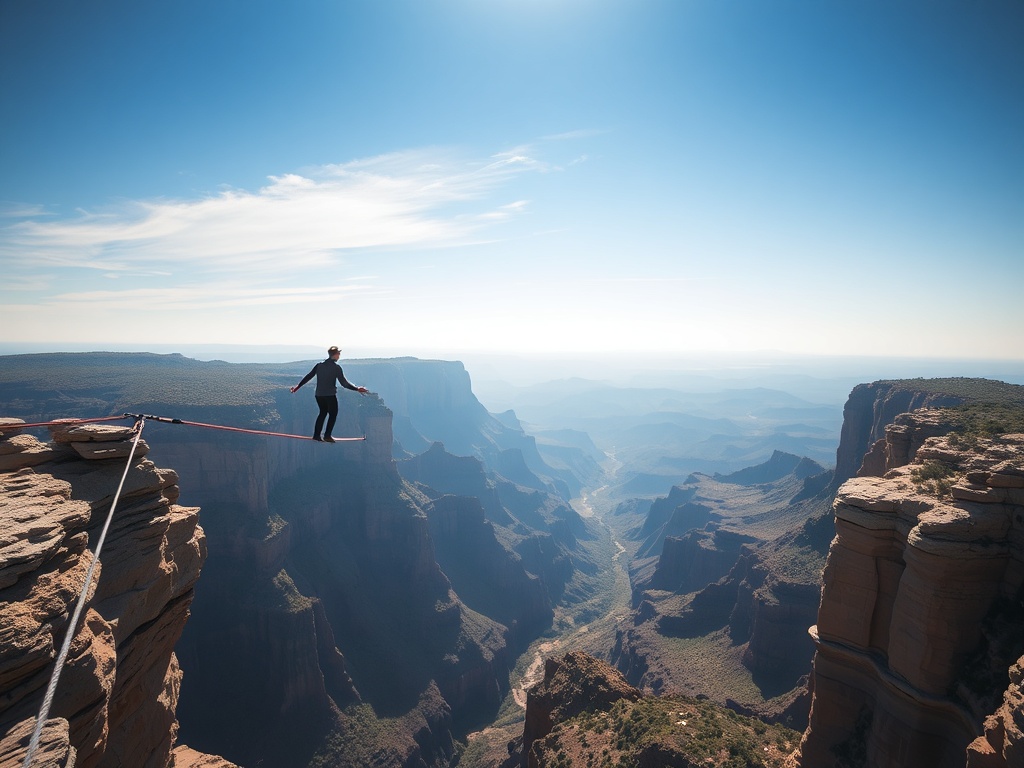
On longer lines, your focal point becomes more intentional. On highlines, it becomes critical. The exposure amplifies every mistake, and visual discipline is what keeps your system calm.
Advanced slackliners don’t abandon this habit—they refine it. Their gaze becomes quieter, more deliberate, almost meditative.
The Deeper Layer: Trust
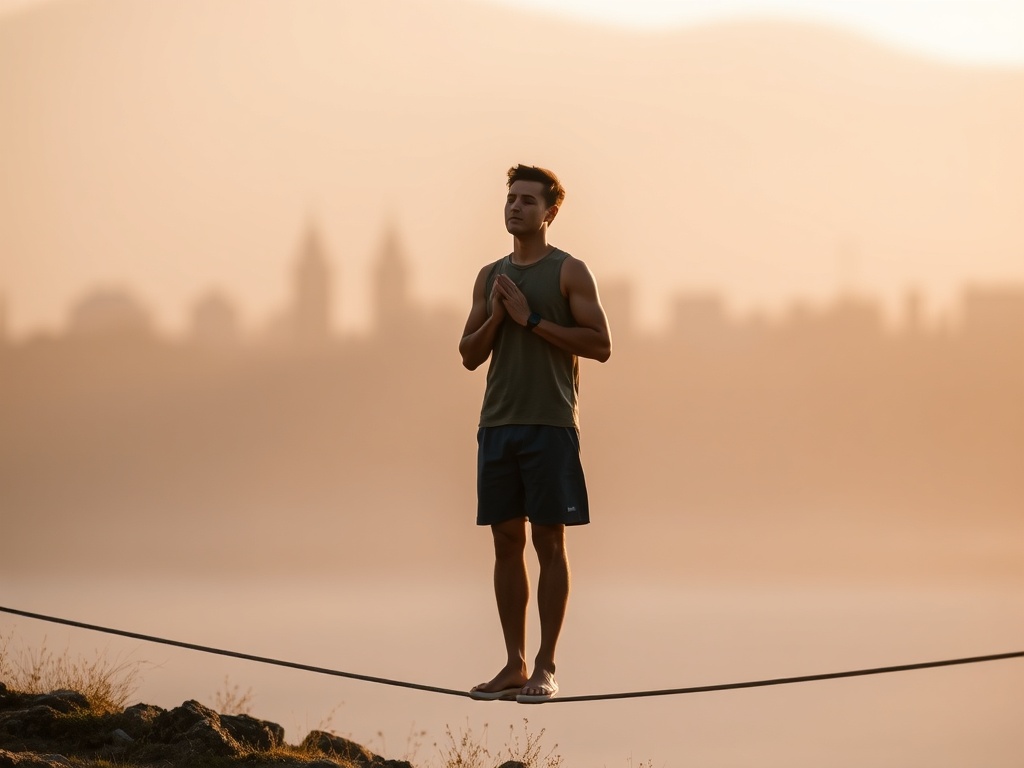
Fixing your gaze forces a shift: you stop micromanaging your feet and start trusting your body.
That trust is what actually unlocks progress. Slacklining punishes over-control. The more you try to force stability, the more unstable you become.
By looking forward instead of down, you’re choosing to let your body solve the problem. And it’s better at it than you think.
This is where slacklining starts to feel less like a struggle and more like flow.
When This Tip Doesn’t Work
There are moments where gaze alone won’t save you:
- If your line is too loose or poorly rigged
- If you’re exhausted and your legs are shaking
- If wind conditions are unpredictable
But even then, fixing your gaze gives you a better baseline than anything else. It won’t solve everything—but it removes one of the biggest self-inflicted problems.
One Session Challenge
Next time you step on a slackline, commit to this rule for an entire session: you are not allowed to look down.
You’ll fall more at first. That’s fine. Stick with it for 20 minutes.
Then notice what changes: your posture, your breathing, your confidence. The difference is usually obvious—and immediate.
This is the kind of adjustment that compounds. Small change, big payoff.
Ignore it, and you’ll keep grinding. Use it, and slacklining starts to click.