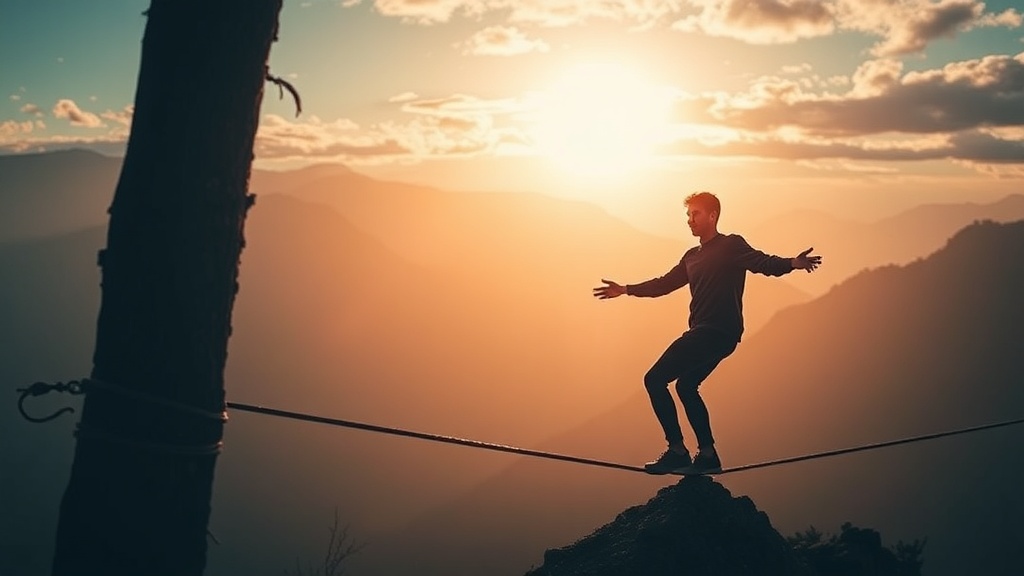
The 3-Second Rule for Slackline Balance

Quick Tip
Focus your eyes on a single unmoving point at eye level for three seconds before attempting to step onto the slackline.
The 3-second rule is a simple focus technique that helps slackliners stabilize faster and stay on the line longer. Whether you're struggling with your first steps or working to hold static poses, this method cuts through the mental noise and gives your vestibular system time to catch up. No special gear required—just your eyes and a bit of patience.
What Is the 3-Second Rule in Slacklining?
The 3-second rule means fixing your gaze on a single, unmoving point for three full seconds before attempting to move or adjust on the slackline. Pick a tree trunk, a rock, or a spot on the ground—anything that doesn't move. Count slowly: one-one-thousand, two-one-thousand, three-one-thousand. That's it.
Here's the thing—most beginners look down at their feet or scan the horizon. Big mistake. Your inner ear and vision are trying to sync up, and rapid eye movements throw off that calibration. By locking onto one spot, you give your brain the stable reference point it needs. The line might still wobble beneath you, but your perception of where "level" sits becomes much clearer.
"The eyes anchor the balance. Fix them first—everything else follows." — Slackline.com instructional archives
Why Does the 3-Second Rule Work for Balance?
It works because it forces your vestibulo-ocular reflex to settle. This reflex connects your inner ear (balance) to your eye movements, and it takes roughly 2-3 seconds to stabilize when you're on an unstable surface. Rush it, and you're fighting your own neurology.
That said, the rule isn't magic—it's timing. Slacklines (especially the Gibbon Classic Line or Balance Community's Type-18) oscillate at frequencies that can trick your proprioception. The 3-second window aligns with how quickly your body can process and counter those micro-movements.
How to Practice the 3-Second Rule on Different Slackline Types?
Start on a low, short line—30 feet or less, about knee height. Walk to the middle, stop, and apply the rule before each step. The technique varies slightly depending on your setup:
| Slackline Type | Best Focus Point | 3-Second Application |
|---|---|---|
| Trickline (2" wide) | Tree at eye level, 20+ feet away | Fix gaze before every bounce or jump |
| 1" Classic Line | Ground marker directly ahead | Hold during stance setup, then step |
| Longline (100+ ft) | Far anchor or distinct landmark | Use at rest points; reset after each sector |
| Highline | Secure anchor or cloud (not ground) | Critical before committing to exposure moves |
The catch? Three seconds feels like forever when you're wobbling. Your brain screams "fix this now!" But reacting immediately usually means overcorrecting—and falling. Trust the count.
Worth noting: some yogis and martial artists use similar techniques. The Dragonfly Yoga Studio in Boulder teaches a "drishti" focus method that's nearly identical. Slacklining just applies it to an unstable platform.
Try it on your next session. Set up that Gibbon line in the park, pick your spot, and count. Three seconds. Then step. You'll feel the difference—or rather, you'll feel less difference between you and the line. That's the point.