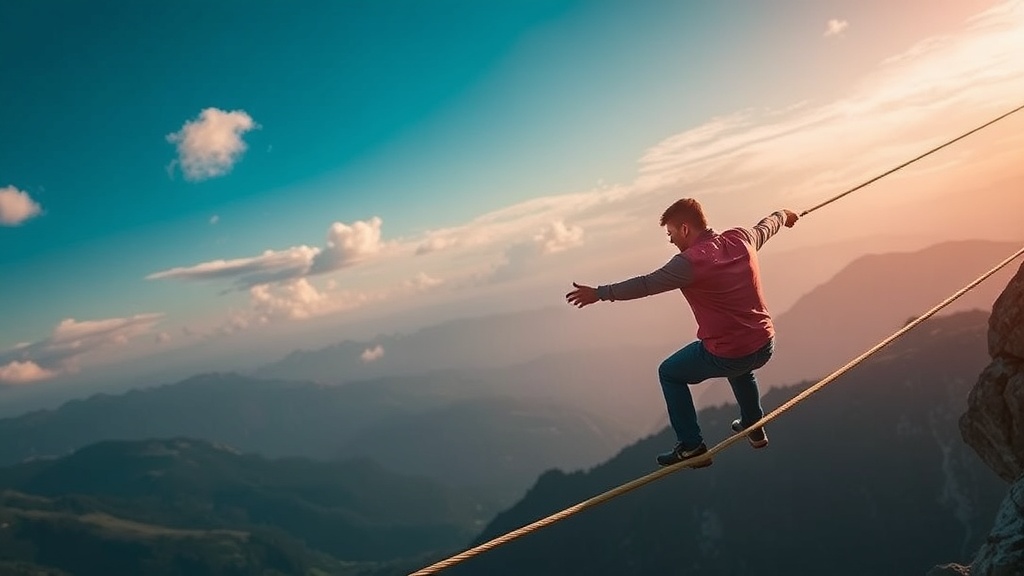
Mastering the Line: A Complete Beginner's Guide to Slacklining

What This Guide Covers (and Why You'll Want to Stick Around)
This guide walks through everything needed to start slacklining—equipment selection, setup techniques, first steps on the line, and progression tips that'll keep frustration low and fun high. Whether the goal is building core strength, improving balance, or simply finding a new outdoor hobby, slacklining offers accessible entry into extreme sports without requiring expensive gear or gym memberships. The line between complete beginner and confident walker is shorter than most expect.
What Equipment Do You Need to Start Slacklining?
A basic slackline kit requires three components: webbing, ratchets or tensioning systems, and tree protection. That's it. Most beginner sets from Gibbon Slacklines or Slackline Industries include everything necessary to rig a line between two trees.
For newcomers, a 2-inch "trickline" style webbing offers stability and forgiveness. The wider surface area makes balancing easier—like training wheels for the sport. Gibbon's Classic Line XL remains the gold standard starter kit, retailing around $80-$100 and including 49 feet of webbing with a ratchet tensioner.
Tree protection matters more than most beginners realize. Bare ratchets and webbing can damage bark, and many parks ban slacklining without proper tree guards. Simple felt or carpet pads work, though purpose-built tree protectors from Slackline.com run about $15-$25. Worth noting: some municipalities require tree protection by law, so this isn't optional equipment—it's mandatory for responsible setup.
Here's what a beginner kit versus an upgrade path looks like:
| Component | Beginner Setup | Upgrade Path |
|---|---|---|
| Webbing | 2-inch polyester (Gibbon Classic) | 1-inch nylon for tricklining |
| Length | 15-25 feet for learning | 50-100 feet for longlining |
| Tension System | Ratchet (easier, heavier) | Pulley system (lighter, complex) |
| Tree Protection | Felt pads or carpet | Specialized tree sleeves |
| Backup Line | Not needed for low lines | Critical for heights above 3 feet |
The catch? Ratchet systems are loud. They clank, they creak, and they're heavy. Purists prefer primitive setups with carabiners and webbing locks—lighter, quieter, but requiring more skill to tension properly. For a first line, though? The ratchet wins. You'll be walking within minutes of unboxing.
How Do You Set Up a Slackline Between Trees?
Find two healthy trees 15 to 30 feet apart, wrap tree protection around each trunk at roughly knee height, attach the slackline's static end to one tree, thread the ratchet through the webbing on the opposite side, and crank until the line feels taut but springy. Setup takes about 5-10 minutes once familiar.
Tree selection deserves more attention than it gets. Look for hardwoods—oaks, maples, beeches—at least 12 inches in diameter. Softwoods like pines can work, but they flex more and some parks restrict them. The trees should be relatively parallel; angled setups create twisted lines that fight the walker.
Height matters. Knee height—roughly 18-24 inches off the ground—is the sweet spot for beginners. High enough to step under comfortably, low enough that falling won't hurt. That said, some beginners set lines too low, which actually makes mounting harder. The line needs clearance for the feet.
Tension is where opinions split. Some prefer a tight trampoline-like feel; others want more sway. Here's the thing: tighter lines feel more stable but deliver harder falls. Looser lines wobble more but absorb impact better. For learning static poses and basic walking, medium tension works best. The line should dip 6-12 inches in the middle when weighted.
Location choice extends beyond trees. Public parks vary wildly in slackline policies. Metro Nashville Parks, for example, permits slacklining in most green spaces with proper tree protection—though checking specific park regulations before rigging saves awkward conversations with rangers. College campuses, climbing gyms, and slackline communities often maintain dedicated practice spots with established anchors.
What's the Best Way to Learn Balance on a Slackline?
Start by sitting on the line, then progress to kneeling, standing with support, and finally free standing—all while keeping the arms up and eyes focused on a fixed point at the end of the line. Most beginners spend their first session just finding balance on two feet.
The mount determines everything. Facing parallel to the line, place one foot flat on the webbing, transfer weight gradually, and bring the second foot up only when stable. Quick, jerky movements kill balance. Slow, deliberate shifts let the body adjust. The line will shake—that's expected. The goal isn't eliminating movement but controlling it.
Arm position matters more than foot placement for beginners. Arms should form a wide "T" shape, moving independently of the hips. Think tightrope walker, not penguin. Some beginners lock their arms rigid, which actually reduces stability. Slight, continuous adjustments work better than frozen poses.
Focusing the eyes on the anchor point—not the feet—helps the vestibular system orient itself. The catch? Looking down feels natural. It takes conscious effort to keep the gaze forward, especially when wobbling. A spotter or friend standing at the line's end provides a visual anchor that helps tremendously.
Falling is part of the process. The line is low—step off, land on both feet, and step back on. No dramatic dismounts needed. Some beginners develop fear after a few hard wobbles, which creates tension, which creates more wobbles. Breathing helps. Exhale during the mount. Stay loose.
"Balance isn't about standing still—it's about making thousands of tiny corrections so smoothly that it looks like stillness."
First Week Progression
Day one should focus purely on mounting and standing. Don't worry about walking. Ten seconds of stable standing beats ten steps of flailing. Here's a realistic first-week roadmap:
- Days 1-2: Mount consistently, stand for 10+ seconds, small controlled bounces
- Days 3-4: First steps—usually 3-5 shuffles before falling
- Days 5-6: Walking the full line length, turning around, sitting transitions
- Day 7: Attempting basic poses—squats, one-foot stands, sitting
Progress varies wildly. Some walk across on day one. Others need a week just to mount confidently. Both paths lead to the same destination. The body adapts faster than expected—proprioception improves dramatically with consistent practice.
What Are the Health Benefits of Slacklining?
Slacklining develops core strength, improves proprioception, enhances ankle stability, and trains full-body coordination in ways that transfer directly to climbing, surfing, skiing, and other balance-dependent sports. It's a legitimate fitness tool disguised as recreation.
The core engagement is constant and subtle. Unlike crunches or planks, slacklining requires dynamic stabilization—the abdominal muscles fire continuously to adjust posture. The result? Functional core strength that supports real movement rather than isolated gym performance. Many climbers use slacklines specifically for core training because it mimics the body tension required on overhanging routes.
Ankle health sees particular benefits. The unstable surface forces small stabilizing muscles—peroneals, tibialis posterior, intrinsic foot muscles—to work constantly. For athletes recovering from ankle sprains, slacklining provides progressive rehab that's more engaging than wobble boards. Physical therapists at Move Forward PT often recommend slacklining for proprioceptive training.
There's a mental component too. Slacklining demands present-moment focus. The mind can't wander—falling is immediate feedback. Many practitioners describe a flow state, that psychological zone where challenge matches skill and self-consciousness disappears. It's meditation with consequences.
How Do You Progress From Walking to Tricks?
Once walking the full line consistently, beginners can add direction changes (turnarounds), sitting and standing transitions, bouncing for momentum, and finally basic static poses like the knee drop or chongo mount. Each skill builds on the last.
The first "trick" for most is the sit start—beginning seated on the line, then standing up smoothly. It sounds simple. It isn't. The transition from seated to standing requires coordinated arm movements and weight shifts that test everything learned so far. Master this, and walking feels easy.
Bouncing introduces dynamic movement. Controlled up-and-down oscillations generate momentum for jumps and bigger moves. The technique? Slight knee bends timed with the line's natural frequency. Too fast, and the line fights back. Too slow, and nothing happens. Finding the rhythm—usually around 1-2 bounces per second—takes experimentation.
Static poses come next. The "knee drop" involves sinking into a deep squat while maintaining balance. The "chongo" is a one-footed mount from a crouched position. These aren't flashy, but they build the body control necessary for more advanced tricklining. Brands like Gibbon sponsor athletes who progress to flips, spins, and combinations that look nothing like the simple walking that started it all.
Here's the thing about progression: rushing creates bad habits. A shaky walk across shouldn't lead immediately to bounce attempts. Clean fundamentals—quiet feet, controlled arms, steady gaze—make advanced skills possible. Sloppy basics create a ceiling that's hard to break through later.
Common Beginner Mistakes
- Over-tensioning the line: Tight lines feel stable but punish poor technique and hurt more on falls
- Looking at the feet: Drops the center of gravity and increases wobble—eyes forward always
- Rigid arms: Locked elbows transfer every vibration to the body—keep them soft and responsive
- Practicing alone: Spotters provide confidence, feedback, and safety reminders
- Wrong footwear: Barefoot or flat-soled shoes (Vans, Five Tens) work better than running shoes with thick heels
- Ignoring setup: A twisted or poorly tensioned line teaches bad balance habits that transfer nowhere
Group sessions accelerate learning. Slackline communities exist in most major cities—Nashville's Centennial Park sees regular Sunday meetups where beginners can try different line types and get tips from experienced walkers. The sport's culture emphasizes sharing space and knowledge rather than territorial claiming.
Ultimately, slacklining rewards patience with progression that feels earned. Every stable stance, every successful mount, every clean walk across represents measurable improvement. The line doesn't lie—it reveals exactly where skill stands in that moment. And when everything clicks—when the wobbles smooth out and walking feels like floating—that's the hook that keeps people coming back. Start simple. Progress slowly. The line will still be there tomorrow.